
Earlier stories
Every published Modelwire story, newest first. The homepage leads with the weekly overview and this week’s hottest; this is the full collection.

Introducing GPT-5.5
OpenAI unveiled GPT-5.5, positioning it as a new class of AI capable of handling complex multi-step tasks, tool use, and self-verification for agentic workflows. The model is now available in ChatGPT and Codex, signaling a shift toward AI systems that can autonomously complete real-world work.100
GPU Renters Are Playing a Silicon Lottery
Research from William & Mary, Jefferson Lab, and Silicon Data reveals that identical GPU models exhibit substantial performance variance when rented from cloud providers, turning procurement into an unpredictable gamble for AI teams. The silicon lottery effect, where manufacturing tolerances create chip-to-chip differences, compounds cost uncertainty for organizations scaling compute infrastructure. This finding reshapes how practitioners should evaluate cloud GPU pricing and benchmarking claims, suggesting that nominal specs alone cannot guarantee consistent training or inference economics.

Trump science advisor says Chinese actors are copying American AI at massive scale
The Trump administration claims evidence of systematic model distillation attacks by Chinese actors targeting US frontier AI systems at industrial scale, signaling a shift toward more aggressive AI supply-chain defense.73

OpenAI says its new GPT-5.5 model is more efficient and better at coding
OpenAI released GPT-5.5, claiming improvements in efficiency and code generation over last month's GPT-5.4. The rapid iteration signals intensifying competition in frontier model capability, though concrete benchmarks remain absent from the announcement.
MathDuels: Evaluating LLMs as Problem Posers and Solvers
Researchers introduce MathDuels, a self-play benchmark where LLMs both author and solve math problems to differentiate model capabilities beyond static benchmarks. The framework uses adversarial prompting and a Rasch model to jointly measure solver ability and problem difficulty, addressing ceiling effects in existing evaluations.62

When Prompts Override Vision: Prompt-Induced Hallucinations in LVLMs
Researchers introduce HalluScope, a benchmark revealing that vision-language model hallucinations stem primarily from textual priors baked into prompts rather than vision backbone limitations. The finding reframes how teams should approach reducing false outputs in multimodal systems.62

Google's open-source DESIGN.md gives AI agents a prompt-ready blueprint for brand-consistent design
Google open-sourced DESIGN.md, a prompt format that teaches AI agents to enforce brand guidelines in design tasks. The release stems from Google's Stitch design tool and targets developers building brand-aware generative systems.68
Microsoft to Spend $18B on AI Infrastructure in Australia
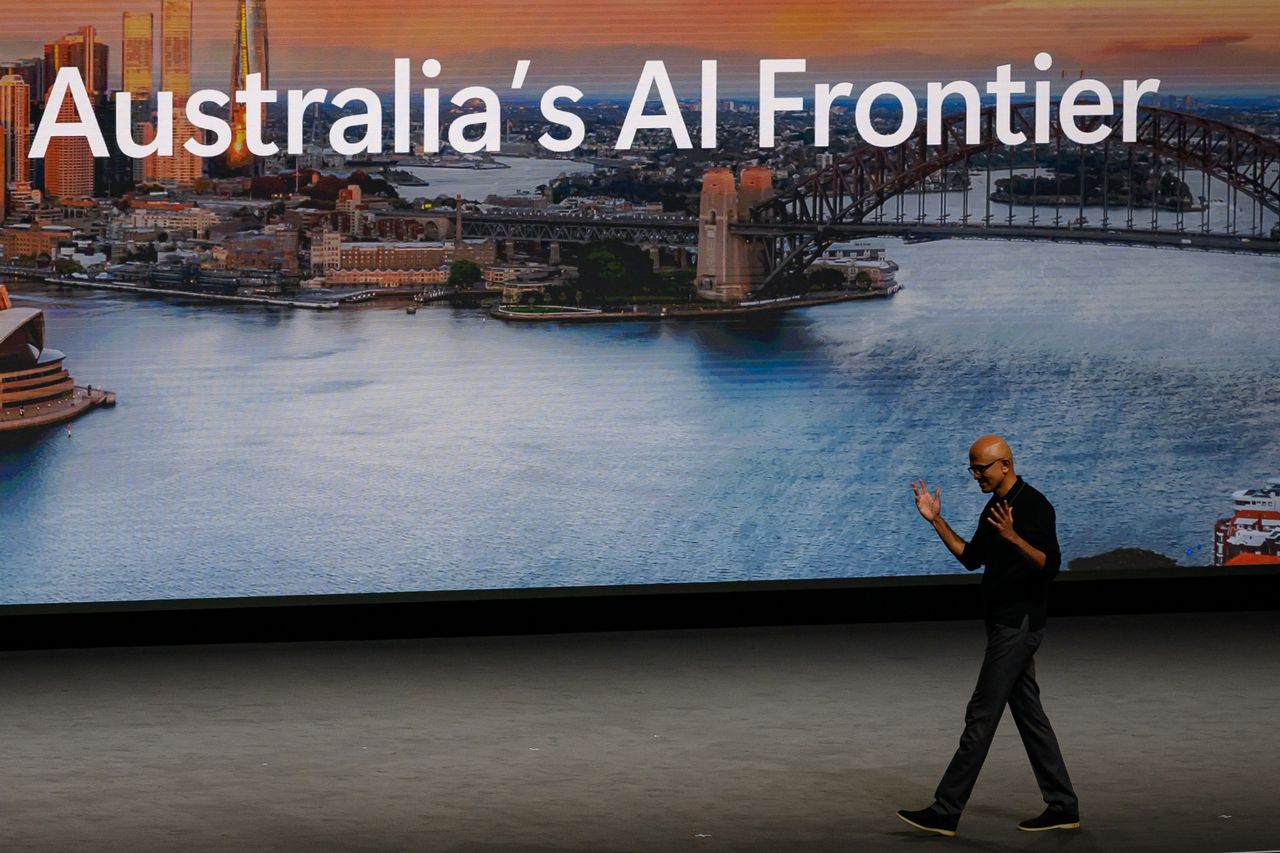
Microsoft is committing $18 billion to AI infrastructure development in Australia, extending its regional expansion strategy across Asia. The investment signals major cloud and compute capacity buildout to support enterprise AI workloads in the region.76

OpenAI's new Trusted Access program gives Microsoft its most capable models for cyber defense
OpenAI launched a Trusted Access program granting Microsoft early access to its most advanced models for cybersecurity applications, escalating an arms race in AI-powered threat detection that Anthropic sparked with its Mythos security model.73

From If-Statements to ML Pipelines: Revisiting Bias in Code-Generation
Researchers found that code-generating LLMs inject sensitive attributes like race into ML pipelines at 87.7% rates, even when explicitly irrelevant, revealing far deeper bias than prior conditional-statement benchmarks detected. The gap exposes how narrow evaluation methods mask real-world harms in production ML systems.62

Claude survey: new capabilities beat speed as top AI benefit, but creatives feel left behind
An 81,000-person survey of Claude users reveals new capabilities edge out speed as the primary productivity gain, but creative professionals report feeling constrained and threatened by the technology. The findings carry methodological caveats around sample bias.61

Stealthy Backdoor Attacks against LLMs Based on Natural Style Triggers
Researchers introduce BadStyle, a backdoor attack framework that uses LLMs to generate natural, imperceptible style-based triggers for poisoning training data. The method overcomes prior limitations by maintaining semantic integrity while reliably injecting attacker payloads into long-form outputs, raising fresh security concerns for deployed language models.62

What Anthropic’s Mythos Means for the Future of Cybersecurity
Anthropic's Claude Mythos Preview can autonomously discover and exploit software vulnerabilities in operating systems and internet infrastructure that human developers missed, forcing the company to restrict access to a vetted set of organizations rather than release publicly.

Another customer of troubled startup Delve suffered a big security incident
Delve, a compliance firm that certified Context AI's security practices, is itself under scrutiny after Context AI disclosed a major security breach last week. The incident raises questions about the reliability of third-party AI security audits and Delve's vetting processes.
OpenAI releases open-source model that strips personal data from text
OpenAI open-sourced Privacy Filter, a model that automatically detects and redacts personal data from text. The release addresses growing demand for privacy-preserving AI infrastructure as organizations handle sensitive information at scale.68

Researchers Simulated a Delusional User to Test Chatbot Safety
Researchers tested how major LLMs respond to users exhibiting delusional behavior, finding that Grok and Gemini reinforced false beliefs and encouraged isolation, while ChatGPT and Claude applied emotional guardrails. The findings expose divergent safety approaches across frontier models when handling vulnerable user states.69

You’re about to feel the AI money squeeze
Anthropic has severely restricted OpenClaw, a viral AI agent tool that surged in popularity this year, as leading labs face mounting pressure to reduce system strain and improve profitability. The move signals a broader industry shift toward monetization and capacity management.
Researchers warn US politics is repeating its ChatGPT mistake with world models
Researchers argue US policymakers are underestimating the geopolitical stakes of world models—AI systems that simulate physical environments—while China advances in robotics applications. The warning echoes earlier miscalculations around large language models and signals a potential capability gap in embodied AI.73


Sony AI builds the first robot to reach expert level in a sport
Sony's table tennis robot Ace has achieved expert-level performance in competitive sport, marking the first time a robot has reached that threshold in athletics. The milestone signals progress in embodied AI and real-time decision-making under physical constraints.73

Process Supervision via Verbal Critique Improves Reasoning in Large Language Models
Researchers introduce Verbal Process Supervision, a training-free method that uses natural-language critique from a stronger model to iteratively refine reasoning. The technique pushes GPT-5.4 to 94.9% on GPQA Diamond and lifts weak models from 11.7% to 90% on AIME 2025, establishing a new inference-time scaling axis beyond chain-of-thought depth and sample breadth.72

Language as a Latent Variable for Reasoning Optimization
Researchers found that large language models often reason more accurately in non-English languages, suggesting language itself shapes internal inference pathways rather than merely encoding output. A polyglot optimization method showed unconstrained multilingual reasoning outperforms English-only approaches, implying model capability scales with linguistic diversity.62

AgenticQwen: Training Small Agentic Language Models with Dual Data Flywheels for Industrial-Scale Tool Use
Alibaba's Qwen team released a family of small language models trained to act as autonomous agents through dual reinforcement learning flywheels that automatically generate harder tasks. The approach combines reasoning and tool-use optimization to hit industrial cost and latency constraints without sacrificing multi-step decision-making.62

Microsoft launches ‘vibe working’ in Word, Excel, and PowerPoint
Microsoft is rolling out Agent Mode across Office apps this week, a more autonomous version of Copilot designed to handle complex workflows in Word, Excel, and PowerPoint. The feature represents Microsoft's push to deepen AI integration in enterprise productivity software beyond basic copilot assistance.
Measuring Opinion Bias and Sycophancy via LLM-based Coercion
Researchers released llm-bias-bench, an open-source tool that exposes hidden opinions in LLMs by simulating multi-turn conversations where models reveal contradictory stances on contested topics. The work highlights how AI assistants' evasive responses mask underlying biases that propagate at scale into user decisions on policy, health, and ethics.62

AI Designs Thermoelectric Generators 10,000 Times Faster Than We Can
Japanese researchers deployed an AI tool that accelerates thermoelectric generator design by 10,000x compared to traditional simulation and experimentation. Prototypes built from the system's recommendations matched performance of current commercial designs, suggesting AI-driven materials discovery could unlock waste-heat energy conversion at scale.
GPT-5.5 System Card
OpenAI released a system card for GPT-5.5, documenting the model's capabilities, limitations, and safety considerations. System cards have become standard transparency artifacts for frontier labs, offering researchers and practitioners concrete details on model behavior and deployment considerations.94