
Earlier stories
Every published Modelwire story, newest first. The homepage leads with the weekly overview and this week’s hottest; this is the full collection.

The Gulf’s AI Boom Has an Undersea Cable Problem
Gulf region hyperscalers face a critical infrastructure bottleneck as undersea cable capacity becomes the limiting factor for AI deployment at scale. Rising computational demand from large language models and training clusters has exposed fragility in regional connectivity, forcing a reckoning with internet backbone resilience. Cable cuts or congestion now pose direct threats to AI service continuity, making infrastructure redundancy a competitive necessity rather than an operational luxury for cloud providers betting on the region.69

Metacognition as Reward: Reinforcing LLM Reasoning via Knowledge and Regulation Signals
Researchers propose Metacognition-as-Reward, a reinforcement learning framework that moves beyond binary outcome signals and rubric-based scoring to guide LLM reasoning through two process dimensions: metacognitive knowledge and metacognitive regulation. The approach addresses a critical gap in current RL methods, which either provide sparse feedback on intermediate steps or demand labor-intensive, task-specific rubric design. By treating the model's own reasoning process as a reward signal, MaR offers a more generalizable path to improving reasoning quality across diverse tasks without per-instance customization. This matters for practitioners scaling RL-based reasoning systems, as it potentially reduces the engineering overhead while maintaining fine-grained guidance on how models should think, not just what they should output.62

From Correctness to Preference: A Framework for Personalized Agentic Reinforcement Learning
Researchers propose PARPO, a reinforcement learning framework that decouples generic task rewards from user-specific preferences, enabling AI agents to adapt behavior across heterogeneous user needs. The work addresses a critical gap in agentic systems: current RL approaches optimize for universal correctness, but real-world deployments require personalized planning and tool-use strategies. By embedding personalization into training-time optimization rather than post-hoc adaptation, this framework tackles entanglement between task quality and conformity effects, opening pathways for agents that scale across diverse user populations without retraining. This matters for production agentic systems where one-size-fits-all policies fail.62

Cultural Adaptation in Large Language Models for Political Discourse
A new framework for cultural adaptation in LLMs exposes a critical gap in how language models handle political discourse across linguistic and institutional boundaries. The research identifies systematic failures when English-trained systems encounter non-Western political contexts, discourse norms, and governance structures. This matters because deployment of LLMs in civic tech, policy analysis, and comparative politics is accelerating without adequate safeguards for cultural validity. The paper formalizes adaptation across translation, discourse semantics, and ontological layers, signaling that trustworthy cross-border AI deployment requires rethinking training data composition and evaluation beyond English-centric benchmarks.62

Convergence Without Understanding: When Language Models Agree on Representations but Disagree on Reasoning
New research challenges a foundational assumption about LLM convergence. While models across different scales and training regimes develop similar internal representations, they reason differently on identical problems, especially on tasks they collectively struggle with. This dissociation matters because it suggests that architectural diversity may mask deeper fragmentation in how models solve problems, complicating efforts to build unified interpretability frameworks and raising questions about whether representational alignment translates to behavioral reliability.62

When Is Next-Token Prediction Useful? Marginalization, Ergodicity, Mixture Identifiability, Local Sufficiency, RAG, Tools, and Programming
A new theoretical framework challenges the standard interpretation of language model training, arguing that next-token prediction alone cannot capture how LLMs actually generate text in real-world contexts. The paper distinguishes between the full conditional distribution (which includes latent circumstances like intent and context), the marginal text-only distribution, and what models actually learn from finite data. This distinction has direct implications for how practitioners should think about RAG, tool use, and code generation, where external constraints and non-textual conditioning are essential. The work suggests current training paradigms may be fundamentally incomplete for tasks requiring grounding beyond token sequences.62

FTC to Require Cox Media Group, Two Other Firms to Pay Nearly $1 Million to Settle Charges They Deceived Customers About “Active Listening” AI-Powered Marketing Service
The FTC's settlement with Cox Media Group and two unnamed firms over deceptive 'active listening' AI marketing claims signals regulatory teeth around voice-data collection practices. The 2024 pitch deck promised real-time intent capture from smart devices, a claim the agency found unsubstantiated. This enforcement action matters because it establishes that vendors cannot market speculative AI capabilities as proven features to advertisers, setting precedent for how regulators will police the gap between AI marketing hype and actual technical delivery in the adtech ecosystem.
FastKernels: Benchmarking GPU Kernel Generation in Production
A critical gap has emerged between how LLM-based kernel generators are evaluated and how they perform in production systems. FastKernels addresses a fundamental misalignment: existing benchmarks use synthetic workloads and isolated GPU environments, rewarding agents for replicating known optimizations rather than discovering novel ones. This creates a false signal where kernels pass sandbox tests but fail when integrated into real inference stacks due to interface incompatibilities and silent correctness issues. The new benchmark spans 46 representative architectures across 8 categories, grounding evaluation in actual production constraints. This work matters because it exposes how optimization metrics can systematically mislead agent training, a pattern likely affecting other infrastructure-level AI automation tasks.62

Hidden Human-Like Nature of Machine-Generated Texts: Theory and Detection Enhancement
Researchers have identified a fundamental vulnerability in LLM detection systems: machine-generated text often contains statistically human-like passages that confound classifiers trained to spot synthetic content. The work theorizes that these embedded natural-seeming spans increase detection difficulty by raising sentence-level complexity, effectively creating a detection ceiling. This finding reshapes the adversarial landscape around content authenticity, suggesting that current paragraph-level detectors may be systematically blind to a structural property of LLM outputs. For platforms relying on MGT detection to combat misinformation and phishing, the implication is stark: existing defenses may have lower real-world efficacy than benchmarks suggest.62

Self-Improving In-Context Learning
Researchers have developed a test-time optimization method that improves in-context learning by refining prompt embeddings based on model confidence signals, without requiring finetuning, token generation, or external data. The technique leverages log-probabilities from a single forward pass to calibrate task inference, making it applicable across classification and generation tasks. This addresses a fundamental bottleneck in prompt engineering: the ability to dynamically adapt demonstrations at inference time using only the model's own uncertainty estimates, potentially reshaping how practitioners approach few-shot adaptation without computational overhead.62

DeepSeek Just Changed How AI Sees Images Forever
DeepSeek has published research on visual primitive representations that fundamentally shifts how neural networks process and reason about images. Rather than treating pixels as raw input, the approach decomposes visual scenes into learned primitive units, enabling more efficient and interpretable image understanding. This technique has implications across computer vision, multimodal models, and embodied AI systems, potentially reducing computational overhead while improving reasoning transparency. The work signals a meaningful departure from end-to-end pixel processing and could influence how future vision transformers and vision-language models are architected.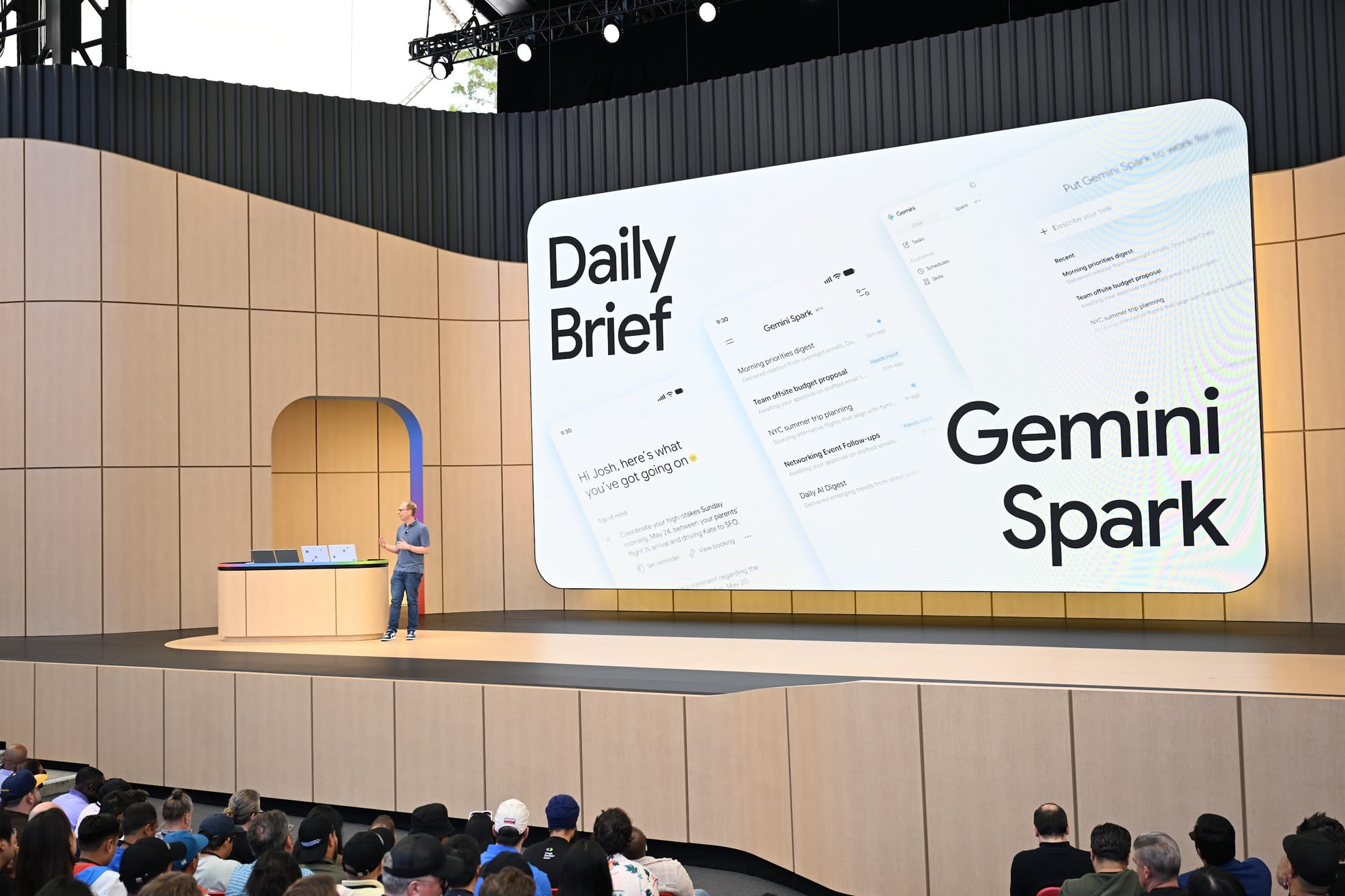
Is the web being summarized to death?
Google's I/O announcements embed agentic AI deeper into core consumer surfaces, particularly email and video platforms, escalating structural tensions between algorithmic curation and publisher economics. The move signals a strategic pivot toward autonomous AI intermediation of user attention, where summarization and content filtering happen before users encounter original sources. This intensifies an existing fault line: as platforms deploy LLM-powered agents to mediate discovery and consumption, publishers face margin compression and reduced direct traffic, while platforms consolidate control over information flow. The shift reflects confidence in AI agents as viable UX primitives, but raises questions about sustainable incentives for content creation at scale.73

Can OpenAI’s ‘Master of Disaster’ Fix AI’s Reputation Crisis?
OpenAI's global affairs chief Chris Lehane is orchestrating a regulatory strategy aimed at shaping state-level AI legislation to align with the company's commercial interests rather than imposing friction on deployment. This signals a shift in how frontier labs are engaging with policymakers: moving beyond reactive compliance toward proactive legislative design. The move reflects growing tension between industry's push for permissive frameworks and emerging calls for stronger guardrails on AI's societal impact. For stakeholders tracking AI governance, this represents a critical inflection point where corporate influence over regulation is becoming explicit and measurable.69

OpenAI named a Leader in enterprise coding agents by Gartner
OpenAI's positioning as a Gartner leader in enterprise coding agents signals consolidation around LLM-powered developer tools as a core enterprise workflow. The recognition validates Codex's maturity for production deployment at scale, positioning OpenAI ahead of competitors in a market segment where code generation directly impacts engineering velocity and ROI. This matters because enterprise adoption of AI coding agents is now moving from pilot to procurement phase, and Gartner placement influences budget allocation across Fortune 500 tech stacks.81

How Virgin Atlantic ships faster with Codex
Virgin Atlantic deployed OpenAI's Codex to accelerate mobile app development under a fixed holiday deadline, achieving near-complete unit test coverage and zero critical defects. The case demonstrates how code-generation LLMs are shifting enterprise software delivery timelines and quality metrics in real-world, time-constrained environments. This signals growing confidence in AI-assisted development for mission-critical systems where shipping speed and reliability matter equally.81

AI Agents Need Computers: 74% MoM Growth, 850K/Day Runs, & New Agent Cloud , Ivan Burazin, Daytona
Daytona is redefining AI agent infrastructure by pivoting from developer environments to purpose-built sandboxes that handle massive scale. The company runs 850,000 sandboxes daily with 74% month-over-month growth, addressing a critical gap: agents need stateful, composable compute with dynamic resource allocation and instant provisioning, not just code execution boxes. By operating on bare metal with custom scheduling, Daytona is capturing a nascent market where reinforcement learning and evaluation workloads now dominate. This signals a fundamental shift in how the AI stack is architected as agents move from prototype to production at scale.85

Meta Is in Crisis, Google Search’s Makeover, and AI Gets Booed by Graduates
Meta's workforce reductions signal intensifying pressure on AI infrastructure spending and talent retention across big tech, while Google's I/O refresh of search integration with generative AI reflects the industry's pivot toward embedding LLMs into core products. Simultaneous graduate-level skepticism toward AI adoption suggests a widening gap between enterprise momentum and public sentiment, reshaping how AI vendors must position capability gains to skeptical stakeholders.69

Roundtables: Can AI Learn to Understand the World?
World models represent a potential inflection point in how AI systems perceive and reason about physical reality, moving beyond the token-prediction paradigm that constrains current large language models. MIT Technology Review convenes senior editors to examine whether this architectural shift can overcome fundamental LLM limitations and what it means for the next generation of AI systems. The discussion surfaces whether industry consensus is crystallizing around world models as the path to more grounded, generalizable AI, or if the technical barriers remain underestimated.
Run long tasks in Codex using goals
OpenAI has promoted Codex's goal mode from experimental status to a core feature, enabling autonomous task execution across extended timeframes without human intervention. The capability allows developers to specify high-level objectives through the Codex app, IDE extensions, or CLI, with the system persisting work across hours or days while accepting mid-course corrections. This represents a meaningful shift toward agentic AI workflows in developer tooling, where LLMs move beyond single-turn code generation into sustained problem-solving with human oversight checkpoints.
In desperate times, graduates find hope in humiliating tech CEOs
Commencement season 2026 has become a flashpoint for public skepticism toward AI leadership. Graduates are systematically heckling tech executives, including former Google CEO Eric Schmidt, who promote AI adoption during speeches. The pattern signals a widening generational divide: while corporate leaders frame AI as inevitable progress, the cohort entering the workforce views the technology through a lens of economic anxiety and institutional distrust. This grassroots pushback reflects deeper concerns about labor displacement, corporate accountability, and whose interests AI deployment actually serves. For the industry, the moment exposes a credibility gap between boardroom optimism and ground-level sentiment that no amount of commencement rhetoric can easily bridge.
Datasette Agent
Simon Willison's Datasette Agent merges three years of LLM library development with Datasette's data exploration platform, creating a conversational interface for querying structured data. The release marks a convergence of two mature open-source projects into a unified AI assistant that can answer natural-language questions and generate visualizations. This represents a practical application layer where LLMs become operational tools for data teams, rather than standalone chat interfaces, and signals how domain-specific AI assistants are moving beyond chatbots into embedded workflows.
We’re launching the Google DeepMind Accelerator program in Asia Pacific to tackle environmental risks
Google DeepMind is establishing a regional accelerator program across Asia Pacific focused on deploying AI to address environmental challenges. This move signals DeepMind's pivot toward applied climate and sustainability work beyond pure research, positioning the lab as a direct competitor to other AI labs' climate initiatives while expanding its footprint in a strategically critical region. The program likely combines model deployment, compute access, and partnership infrastructure to help local organizations scale environmental AI applications, reflecting broader industry momentum around AI-for-good initiatives and geographic diversification of AI capability centers.
Spotify and Universal Music strike deal allowing fan-made AI covers and remixes
Universal Music Group and Spotify are formalizing a revenue-sharing framework for generative audio, legitimizing AI-assisted music creation as a licensed product category rather than a copyright gray zone. This partnership signals that major rights holders are moving from litigation posture to commercialization, embedding artist compensation into the generative workflow itself. The model matters: rather than policing AI covers post-hoc, the deal bakes consent and payment into the platform, potentially reshaping how the industry handles synthetic media and setting a precedent for other entertainment verticals facing similar pressures.
Six search engines worth trying now that Google isn’t really Google anymore
Google's search interface is undergoing significant transformation driven by AI integration, particularly through expanded AI Overview features that are reshaping how results are presented to users. This shift signals a broader industry pivot where traditional search ranking and link-based discovery are being displaced by AI-generated summaries and direct answers. The emergence of viable alternatives reflects growing user friction with AI-first search, creating an opening for competitors to capture dissatisfied users. For the AI ecosystem, this represents a critical inflection point: search monetization models, training data sourcing, and user behavior patterns are all in flux as the dominant search paradigm transitions from indexing to generation.
Scaling creativity in the age of AI
MIT Technology Review examines how AI is reshaping creative expression and storytelling across media. The piece traces humanity's long history of technological innovation in narrative forms, from pigment-based cave art through photography, and positions generative AI as the latest inflection point in how stories are authored, distributed, and consumed. The strategic angle centers on whether AI tools democratize creative capacity or concentrate it, and how creators navigate authenticity when machines can generate narrative at scale. This matters to the AI landscape because it reframes the cultural stakes of generative models beyond productivity metrics into questions of artistic agency and human meaning-making.
Share Codex plugins with your team
OpenAI has expanded Codex's plugin ecosystem to enable team-level distribution and governance, allowing organizations to standardize internal tool access across workspaces. This shift from individual to collaborative plugin management reflects a broader maturation of AI development platforms toward enterprise workflows, where plugin curation and access control become operational necessities. The move signals OpenAI's positioning of Codex as infrastructure for scaled, multi-user AI development rather than isolated experimentation, directly competing with similar team collaboration features in competing LLM platforms.
Google checks websites for llms.txt in new agentic browsing audit
Google is expanding Lighthouse, its web performance audit tool, to measure how well websites accommodate AI agents through a new 'Agentic Browsing' category that checks for llms.txt compliance. This signals a structural shift in how the web is being optimized: rather than just human visitors, sites must now account for machine agents crawling and interacting with their content. The move reflects growing pressure on publishers and platforms to establish machine-readable protocols for AI access, effectively standardizing agent behavior expectations across the internet. For developers and site owners, this represents a new compliance surface alongside SEO and accessibility.73

Introducing Appshots in Codex
OpenAI has integrated Appshots into Codex, enabling developers to anchor coding assistance to live application context. The feature captures both visual and non-visible window content via a Mac keyboard shortcut, allowing the LLM to reason over real-time UI state rather than abstract code snippets alone. This represents a meaningful shift in how code generation models consume context, moving beyond static files toward dynamic runtime environments. The rollout across consumer and enterprise tiers signals OpenAI's push to deepen Codex's integration into developer workflows, competing directly with IDE-native AI assistants that lack this contextual richness.